
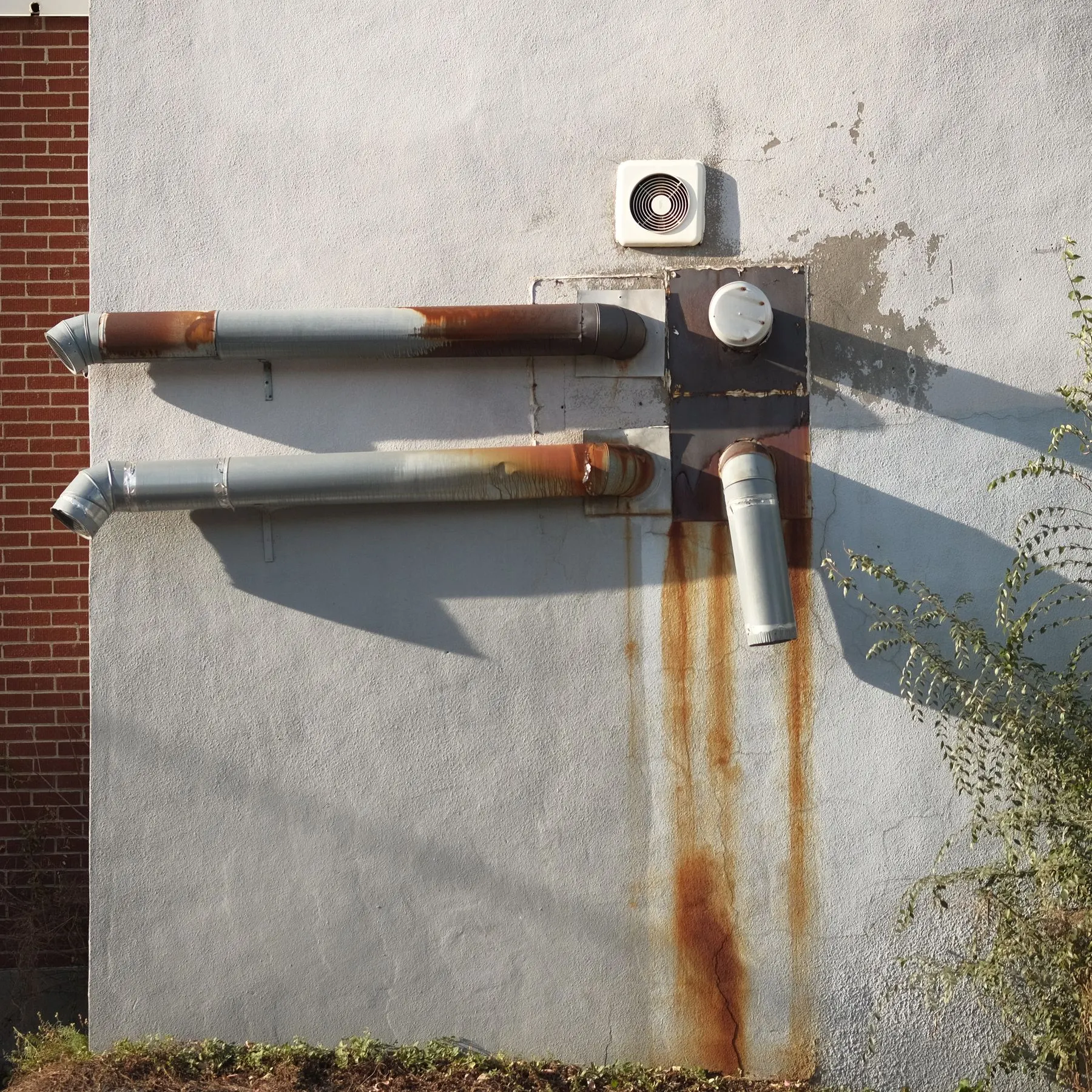
A dryer vent should be rerouted when its equivalent length is over what the dryer is rated for, usually 35 feet under the residential code, or when it clogs again soon after every cleaning. With AZ Dryer Pros, rerouting in Arizona starts at $399. The technician measures the current run, shows you the new route and gives you the exact price before any work starts. If you decide not to reroute, you only pay for the work you approved.
Signs your vent route is the problem
- It clogs again a few months after a cleaning
- Drying is slow even with a clean vent
- The run goes up through the attic and across the house
- It has four or more sharp turns
- It sags in the attic or crawl space
- The dryer was moved and the old route was stretched to reach it
Counting the length the way the code does
The residential code (IRC M1502.4.5.1) limits a standard run to 35 feet from the transition hose connection to the outside, and turns count against it: 5 feet for a sharp 4-inch 90° elbow, 2½ feet for a 45°. A vent that looks like 22 feet with three 90s and a 45 is really 39½ feet. The dryer manufacturer's instructions take precedence and some allow more, but a dryer working against a long, bent run is slower no matter what the paperwork says.
What rerouting looks like in Arizona homes
The usual fix is moving the outlet from the roof to the nearest exterior wall, cutting out an attic loop, or replacing a string of elbows with a straighter line. In stucco homes we cut a clean opening, install the duct and outside hood, and seal around it. If the wall needs stucco texture or paint matched afterward, we tell you before you decide. The old route is disconnected and capped so it can't collect lint.
When rerouting isn't possible
Some laundry rooms are simply too far from any outside wall. Then the choices are the shortest roof route, a booster fan installed to the fan maker's instructions, or more frequent cleaning. We explain each one so you can pick what fits the house and the budget.
How a visit works
- Measure today's run. Straight feet, every elbow, and the airflow at the outside hood.
- Show the new route. Where it would go, how long it would be, and the exact price.
- Reroute. New rigid metal duct, sealed joints, new hood; old route closed off.
- Compare. We measure the airflow again so you see the difference.
Sources: U.S. Fire Administration, clothes dryer fire safety; International Residential Code M1502.4.5.1 (2015/2018).